1.0 PROTOCOL
2.0 APPRECIATION
It is with a heart overflowing with gratitude and reverence to the Almighty God that I stand before you today. I give all glory, honour and adoration to the Lord for His boundless grace, His unfailing guidance, and His divine orchestration of this moment. The election that ushered us into stewardship as Office Holders and members of the Governing Council for the 2026–2028 term, and which, with deep humility and sincere gratitude, conferred upon me the honour of serving as the 24th President and Chairman of Council of The Chartered Institute of Bankers of Nigeria, remains a defining milestone in the distinguished annals of our revered Institute. Marked by an unprecedented mobilisation of our membership, an extraordinary level of participation in the elections, and an overwhelming affirmation of trust, the process reflected a historic outpouring of confidence and collective belief in the future of our Institute. For this remarkable mandate and the resounding show of support, we remain deeply grateful.
To the distinguished members who entrusted this leadership team with such a huge responsibility, I extend my heartfelt appreciation. Your confidence inspires renewed resolve and reinforces our determination to lead with clarity of vision, steadfast integrity, and courage of conviction. Together, we bear the shared responsibility of advancing a profession that lies at the very heart of national development and economic stability.
Isaac Newton said, “If I have seen further, it is by standing on the shoulders of giants”. We stand today on the shoulders of giants, our visionary Founding Fathers and our esteemed Past Presidents, whose sacrifice, foresight, and exceptional leadership laid the strong foundation upon which this Institute has continued to grow in relevance, influence, and prestige. Their legacies endure not merely in history, but in the values we uphold, the standards we defend, and the excellence we pursue.
I also acknowledge, with deep respect, our Immediate Past President and Chairman of Council, Professor Pius Deji Olanrewaju, Ph.D, FCIB, for his visionary, exemplary and transformational leadership. His disciplined leadership, strategic clarity, and principled stewardship further strengthened the institutional framework we now inherit. The progress we celebrate today affirms the enduring power of continuity, and we are privileged to build upon so firm and noble a foundation.
I thank our royal fathers for adding colour and glamour to this ceremony with their presence – His Imperial Majesty, Ooni Adeyeye Enitan Ogunwusi, CFR, Ojaja 2, Ooni of Ife, His Royal Majesty Oba Lukman Fadipe, the Owa of Otan Ayegbaju, Oba Samuel Idowu, Akesin of Ora – Igbomina, Oba Sikiru Adeseun, Oluresi of Iresi and Oba Qamarudeen Adeyemi, Olororuwo of Ororuwo. May your reign be long and peaceful.
I extend sincere appreciation to the Leadership of the Central Bank of Nigeria - our esteemed Governor, Mr Olayemi Cardoso, FCIB, and members of the Board of Governors, the leadership of the Nigeria Deposit Insurance Corporation, as well as the Body of Bank Chief Executive Officers, led by Dr. Oliver Alawuba, for their guidance, collaboration, and steadfast support. I equally recognise our corporate members, development partners, and stakeholders across the financial services ecosystem for their confidence in the Institute and their continued partnership in advancing the frontiers of ethics and professionalism.
I extend my commendation to the members of the Governing Council, our esteemed Office Holders, and the management and staff of the Institute, under the able leadership of the Global Registrar/Chief Executive, Mr. Akin Morakinyo. Benjamin Franklin once said “Diligence is the mother of good luck. Your resolute diligence and steadfast dedication have continued to translate aspiration into action and strategy into tangible results, thereby reinforcing the strength, responsiveness, and progressive outlook of our Institute.
I am immensely grateful to the Chairman of today’s occasion, Mr Emmanuel Ikazoboh, Chairman, Board of Directors, Dangote Cement PLC, and former Chairman of the Board of Directors of Ecobank Transnational Incorporated (ETI), the holding company for the Ecobank Group, for honoring me with his acceptance to be the Chairman of the event.
I extend my special thanks to all the esteemed dignitaries and special guests of honour, some of whom have been my mentors over the years, as well as friends, teams and groups with whom I have had long standing relationships – my distinguished elders, brothers and sisters who are members of Osun Development Association (ODA), the EXCO team and general members of my community union – Otan Ayegbaju Progressive Union (OAPU) as well as Alumni members of Anglican Grammar School, Otan Ayegbaju, the University of Ife Accounting 1987 Set, Babcock University and KPMG.
I must acknowledge my Ecobank family, my leaders, colleagues and friends whom I have worked with for over 3 decades – Mr. Arnold Ekpe, former GCEO of Ecobank Group, Mr. Jeremy Awori, the current GCEO of Ecobank Group, Mrs. Bola Adesola (FCIB), Chairman of Ecobank Nigeria, Mr Bolaji Lawal (FCIB), Managing Director of Ecobank Nigeria, Mr. Patrick Akinwuntan (FCIB), immediate past MD of Ecobank Nigeria, Dr. Jibril Aku (FCIB), past MD of Ecobank Nigeria, Mr. Oladisun Holloway (FCIB), past MD of Ecobank Nigeria, Directors, management and staff of Ecobank Nigeriia, Ecobank Alumni members, the Board of Directors, management and staff of ETI Specialised Resolution Company (ESRC).
My profuse appreciation goes to my spiritual leader in the hall - Pastor Charles Kpandei, the Pastor in charge of Region 11 of the Redeemed Christian Church of God (RCCG) and his wife, Pastor (Mrs.) Bola Kpandei, for their continuing fervent prayers and spiritual support. I acknowledge with thanks the presence of my Pastor, Pastor Biyi Famoyegun, the Assistant Pastor in charge of Region 11 of the RCCG and his wife, Pastor (Mrs) Peju Famoyegun.
Finally, I extend my profound gratitude to my dear wife, Folasade, my gorgeous partner of immeasurable value, who has continued to provide tremendous support for me through the years. I appreciate my children – Oluwatomiwa, Oluwatofarati and Oluwatofunmi, in whom I am very proud. I remain indebted to my late parents, Mr. David Alabi and Mrs. Deborah Alabi, who made sacrifices to give me quality education, my siblings and family members, whose sacrifices, unwavering support, and constant encouragement are my source of strength.
3.0 GENERAL ECONOMIC ENVIRONMENT
Distinguished Ladies and Gentlemen, it is important to situate our stewardship within the broader economic environment, because the banking and financial services industry does not operate in isolation. It is shaped, directly and continuously, by global developments, domestic economic performance, and the policy choices that define stability, growth, and confidence.
The global economy is characterized by some level of uncertainty, with the IMF projecting growth to moderate to about 3.1% in 2026 before stabilising at 3.2% in 2027. The ongoing U.S. /Isreal – Iran conflict, which has culminated into the partial closure of the Strait of Hormuz, which provides passage for about 20% of global oil and gas supply and approximately 30% of fertilizer supply has disrupted the global energy and fertilizer markets.
The conflict, particularly given its negative impact on oil and fertilizer supply routes and prices, has introduced fresh inflationary pressures, weakened growth momentum and tightened global economic and financial conditions.
For Nigeria, this reinforces the need for domestic resilience both at the national and sub-national levels, as external financing conditions will remain volatile and increasingly sensitive to geopolitical shocks. Encouragingly, the Nigerian economy is showing signs of recovery. Real GDP grew by 3.87% in 2025, up from the 3.38% recorded in 2024, with broad-based expansion across agriculture, industry, and services. Growth is increasingly driven by the non-oil sector, which accounts for 97% of real GDP, underscoring the country’s gradual economic diversification. However, macroeconomic pressures persist. Inflation remains elevated, monetary policy is tight despite the modest reduction in the MPR by 50 basis points from 27% to 26.5% in February 2026, while the stringent financing conditions continue to constrain private sector activity. On a positive note, the foreign exchange reforms have led to a more market-aligned rate regime, while enhancing transparency and price discovery.
Within this context, the recapitalization of Nigerian banks stands as a pivotal structural reform to reinforce the financial system’s capacity to support growth. As at March 31, 2026, thirty-three (33) banks had mobilised a total of ₦4.65 trillion, with domestic investors accounting for 72.55% of the capital raised and foreign portfolio investors contributing 27.45%. Consequently, total post-recapitalization capital across the thirty-seven (37) banks stood at approximately ₦7.198 trillion as at the same cut – off date. This exercise goes beyond mere expansion of balance sheet footing. It is designed to enhance the resilience of banks, enable larger-scale financing, and improve the transmission of credit to the critical sectors of the economy. Since capital provides a buffer for shocks and losses, the recapitalisation of Nigerian banks will translate into a more robust and stable banking system. However, the ultimate success will be measured by the extent to which banks translate this enhanced capacity into increased lending to productive sectors, deeper financial inclusion, and sustained economic transformation.
4.0 ACCEPTANCE
Distinguished members of our highly revered Institute, I wish to express my profound gratitude to our esteemed members for the enormous confidence reposed in me and in my colleagues, whom you have graciously elected to superintend the affairs of this great Institute over the next two years. The unprecedented turnout at the recent election stands as a powerful testament to your passion, unity, and overwhelming support, for which we remain deeply grateful and most humbled.
On this note, esteemed members of our great Institute, it is with a profound sense of responsibility, and unwavering accountability that I wholeheartedly ACCEPT the mandate you have bestowed upon me to serve as the 24th President and Chairman of Council of our Institute.
I am fully conscious of the high expectations that accompany this sacred trust, expectations rightly reposed in myself and my colleagues who have just taken the oath of office. Let me, therefore, on behalf of the team, give you our solemn assurance that we shall spare no effort, deploy our utmost abilities, and remain steadfastly committed to faithfully delivering on the mandate you have entrusted to us, in the best interest of our Institute, the members, and the financial services industry.
5.0 STRATEGIC FOCUS: THE IMPACT AGENDA
Distinguished Ladies and Gentlemen, the banking and financial services landscape, both globally and within our country, is undergoing profound transformation. The convergence of rapid technological advancement, evolving customer expectations, regulatory reforms, and macroeconomic pressures have redefined the way financial institutions operate, compete, and deliver value.
In Nigeria, recent developments, particularly the recapitalisation of banks, the rise of FINTECHs and a renewed focus on financial inclusion, have further underscored the need for a more resilient, inclusive, and forward-looking financial system.
Within this dynamic environment, The Chartered Institute of Bankers of Nigeria must continue to rise to its responsibility as the standard-bearer and the conscience of the banking and finance industry. We must not only respond to change but shape it; not only adapt to emerging realities but provide thought leadership and direction.
It is important to acknowledge that we are not starting from ground zero. However, as aptly stated by Albert Einstein, “ life is like riding a bicycle – to keep your balance, you must keep moving”. Consequently, we shall build on the solid foundation laid by previous leaders, particularly the remarkable strides made by my predecessor, which have strengthened ethics, inclusivity, competence, and institutional relevance. Our task, therefore, is to consolidate these gains while positioning the Institute for even greater impact in a rapidly evolving global environment.
It is in this context and the consideration of our current realities that our strategic direction will focus on Consolidating Our Local Impact, Enhancing Our Global Relevance to deepen our influence within Nigeria while strengthening our position as a globally respected professional body.
To operationalise this vision, we will be guided by a six-pillar strategic agenda encapsulated in the acronym IMPACT.
The full meaning of each of the alphabets in the IMPACT Acronym is as follows:
Collectively, these pillars reflect our resolve to build a more inclusive Institute, strengthen the value of our membership, uphold the highest standards of professionalism, ensure responsible governance, develop world-class competencies, as well as leverage technology to drive innovation and growth.
I will now proceed to take a deeper dive into the key highlights of the IMPACT strategic focus as follows.
5.1 Inclusion
Distinguished Ladies and Gentlemen, inclusion remains critical to the relevance and sustainability of the financial system; therefore, we will prioritise deeper participation, wider access, and greater representation across gender, generations, geography, and financial services, through the following:
Nigeria’s financial services landscape is increasingly interconnected, yet gaps remain in stakeholder alignment, regulatory coordination, and evidence-based policy engagement. To address this, the Institute will strengthen its role as a unifying professional platform for the broader financial services ecosystem by:
5.1.2 Women Empowerment Platforms
Women remain a critical yet under-leveraged force within the financial system, with gaps still evident in participation, leadership representation, enterprise support, and access to growth opportunities. To address this, the Institute will work in conjunction with the Association of Professional Women Bankers (APWB) to strengthen structured platforms that empower women professionals and women-owned enterprises through the following:
Summit
5.1.3 Financial Literacy and Awareness Initiatives
Low financial awareness remains a major barrier to financial inclusion, and the Institute will prioritise practical financial literacy to help individuals and businesses make informed financial decisions through the following:
institutions to drive financial literacy across the country
Research and Development Council (NERDC)
Regulators
Players in the Ecosystem
5.1.4 MSME Development and Financial Access Platforms
Micro, Small and Medium Scale Enterprises (MSMEs) remain central to economic growth and employment, yet many still face limited access to finance. In this vein, the Institute will create structured platforms to support their growth through the following:
Adoption
5.1.5 Deepen Gender, Generational, and Geographic Inclusivity:
Building on previous progress, we will adopt a deliberate and measurable approach to strengthen balanced representation across gender, generations, and geopolitical zones, for members and potential members of the Institute.
5.2 Membership Economy
The strength of a professional Institute lies not only in the size of its membership but in the value it delivers; therefore, while the Institute has recorded commendable growth, we will deepen member relevance, engagement, and value through a more dynamic and value-driven membership economy, by adopting the following strategies:
5.2.1 Strengthen Membership Growth and Quality
While the Institute has recorded commendable membership growth, the next phase will encompass the following:
membership base
5.2.2 Youth Pipeline Development – “Catch Them Young” Initiative
The future of the banking and financial services profession depends on a strong talent pipeline. Consequently, the Institute will strengthen youth pipeline development through the following:
of the Institute
5.2.3 Enhancement of Membership Value Proposition
Membership must deliver clear, tangible, and continuous value. The Institute will therefore reposition membership as a platform for career advancement, professional development, networking, and long-term relevance through the following:
Mapping
Development
Opportunities
5.2.4 Establishment of Foreign Outposts (International Branches)
The Institute will expand its global footprint by establishing international branches in strategic locations to strengthen diaspora engagement, membership growth, certification access, professional development, networking, cross-border collaboration, and global relevance.
5.2.5 Relevance and Leadership
In an increasingly interconnected financial system, the Institute’s relevance must extend beyond national boundaries; therefore, we will consolidate the Institute’s leadership within regional and global professional bodies, deepen international partnerships, and strengthen global thought leadership.
5.3 Professionalism and Ethical Conduct
Ethics and professionalism remain at the core of the Institute’s mandate. As industry complexities, regulatory pressures, and reputational risks evolve, we will reinforce the Institute’s role as the custodian of professional integrity within the financial services industry. This will be done through the following:
5.3.1 Reinforcement of Ethical Standards and Compliance Culture
We will strengthen the Institute’s position as a central driver of compliance culture, ethical conduct, and professional accountability through the following.
Frameworks
5.4 Accountability and Enhanced Financial Performance
Institutional credibility is built on accountability, transparency, and responsible stewardship. While the Institute has maintained a positive financial trajectory, we will prioritise accountability as a core governance principle.
5.4.1 Promote Transparency and Prudent Resource Management
We will continue to strengthen governance practices through transparent reporting, disciplined resource management, and accountability across all levels of decision-making.
5.4.2 Sustain Financial Performance and Growth
Sustained financial performance is essential to the Institute’s ability to deliver on its mandate. Consequently, we will ensure the following: cost discipline, growth and diversification of the revenue base, enhanced financial planning and performance management.
5.5 Competencies and Skills Development
In a rapidly changing industry, the relevance of a professional body depends on the competence of its members; therefore, we will prioritise skills development, curriculum relevance, certification quality, and continuous professional learning, through the following:
5.5.1 Comprehensive Review of CIBN Programmes, Curriculum and Syllabus:
We will undertake a comprehensive review of the Institute’s programmes, curriculum, and syllabus to ensure alignment with global best practices, emerging trends, technology, regulation, and the evolving needs of the banking and financial services industry.
5.5.2 Certification Programmes of the Institute:
We will reposition the Institute’s certification programmes to be more practical, industry-driven value creators that equip professionals with relevant, workplace-ready competences by:
5.5.3 Compulsory Continuous Professional Development (CCPD)
Professional relevance requires continuous learning. We will therefore strengthen the CCPD framework to ensure members remain competent, competitive, and responsive to industry change.
5.6 Technology, Automation, and Innovation
Technology is reshaping the financial services industry. We will build on the Institute’s existing digital transformation efforts to deepen integration, scale adoption, and optimise systems for improved service delivery, institutional effectiveness, inclusion, growth, and industry leadership through the following:
5.6.1 Leverage Technology for Development
We will continue to adopt technology as a foundation for operational efficiency, improved service delivery, and financial sector development by:.
Excellence
5.6.2 Enhance Digital Transformation of the Institute
We will continue to deploy automation to strengthen performance management and productivity across the Institute by:
6.0 CONCLUSION
Distinguished Ladies and Gentlemen, The Chartered Institute of Bankers of Nigeria stands today on a strong foundation laid by successive Presidents and Governing Councils. We will firmly anchor on these accomplishments and be guided by them. What we now seek to do is to consolidate and build upon these gains in a structured and deliberate manner. The IMPACT Agenda reflects this continuity. It is not conceived as a departure, but as a framework for strengthening alignment across the Institute’s priorities, bringing together inclusion, membership value, professionalism, accountability, competency development, and technology within a more coordinated and disciplined structure.
According to Alexander the Great, “ there is nothing impossible to him who will try”. Our responsibility over this tenure is therefore clear: to steward the Institute with discipline, to maximise the value of the progress already made, and to ensure that the Institute remains resilient, well-structured, and responsive to the demands of an evolving financial services landscape. We will work hard together as a team to achieve this goal, leaning on the quote by Thomas Edison – “ genius is 1% inspiration and 99% perspiration” and the conviction expressed by Jim Rohn “ If you really want to do something, you’ll find a way, but if you don’t, you’ll find an excuse”. We will approach this responsibility with humility, respect for established standards, and a firm commitment to the Institute’s long-term interests.
Mark Twain stated that “the secret to getting ahead is getting started”. As we assume this office and commence our tenor, we do so with a full appreciation of the trust placed in us, and with a commitment to discharge it with integrity, prudence, and focus. It was Abraham Lincoln who once said, “In the end, it's not the years in your life that count. It's the life in your years” and as postulated by Albert Eistein, “we will learn from yesterday, live for today and hope for tomorrow”.
In conclusion, Distinguished Ladies and Gentlemen, the IMPACT Agenda is not merely a statement of intent; it is a call to purposeful action. It is designed to ensure that the Institute remains relevant, responsive, and resilient, while continuing to play a pivotal role in shaping the future of the banking and finance industry in Nigeria and beyond.
With your support and collaboration, we are confident that this IMPACT agenda will deliver meaningful outcomes for the Institute, our members, other stakeholders, and the broader economy.
As Tony Robbins rightfully remarked, “The only limit to our impact is our imagination and commitment.”
I will make an impact.
You will make an impact
Together, we will all make an impact.
Long Live The Chartered Institute of Bankers of Nigeria!
Long Live the Banking and Finance industry!
Long Live the Federal Republic of Nigeria!
Thank you for your kind attention. God bless you all.
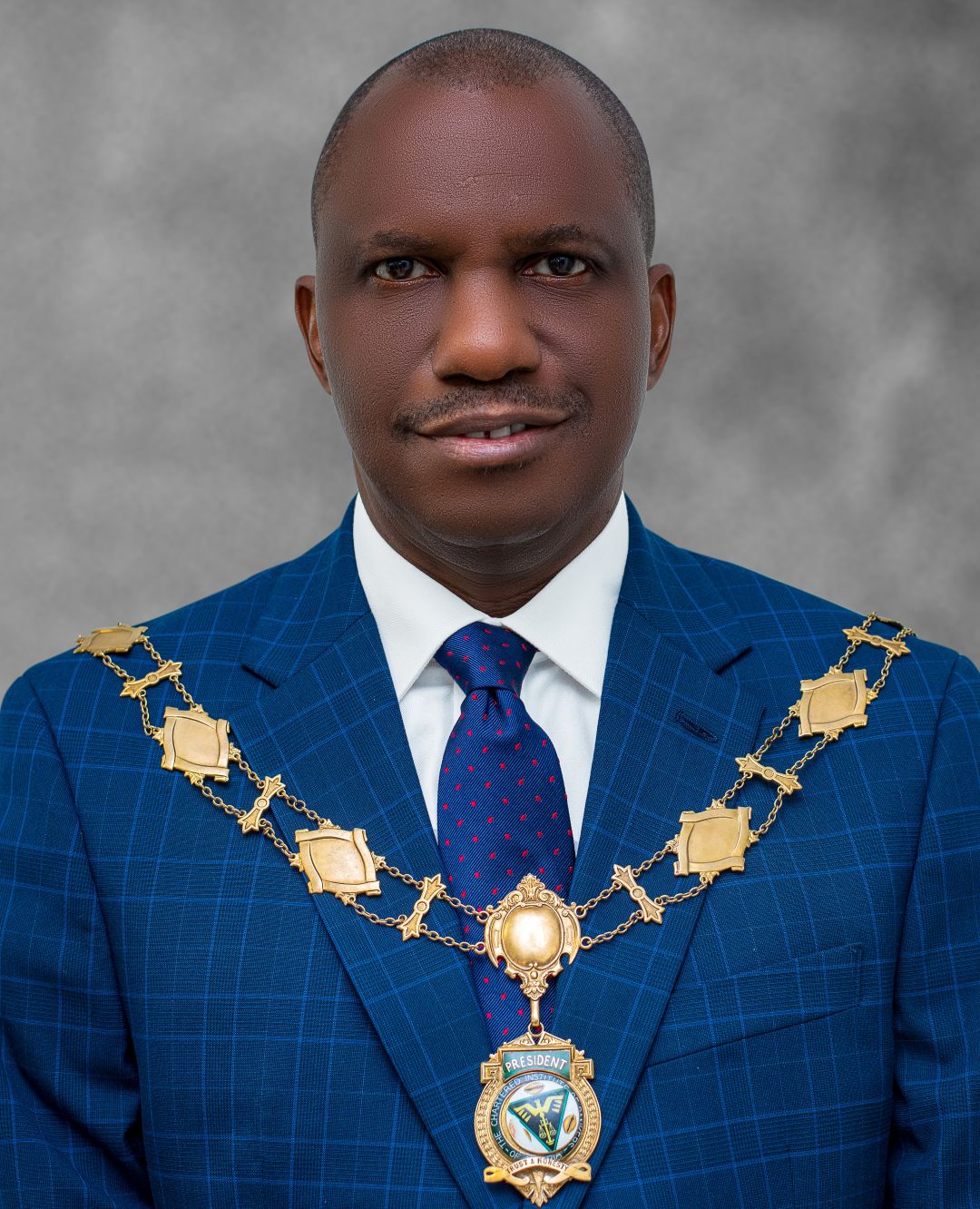
Dele Alabi, Ph. D, FCIB
24th President/Chairman of Council,
The Chartered Institute of Bankers of Nigeria
May 16, 2026